A new solution for a new problem

Your child's attention
is being engineered away.
We can rebuild it.

Social media platforms are designed to fragment young brains for profit. Teevra is the science-backed antidote — a focus-training program disguised as a game your child will actually want to play every day.

Validated by UC Berkeley Neuroscientists
15 minutes a day
Measurable results in 6 weeks
No prescription required
The Attention Crisis

The numbers are alarming — and they're getting worse

This isn't about children being lazy or undisciplined. Something is actively reshaping how young brains work. The data is unambiguous.

47s
Today's average attention span on screens
Down 69% from just 2 minutes in 2004 — in a single generation.
7hrs
Daily screen time for the average child
43% of all waking hours. More time on screens than in school.
25%
Decline in executive function
In children spending 5+ hours on recreational screens — affecting planning, decision-making, and self-control.
2.7×
Higher risk of depression
Teens with high daily screen time, per official 2025 CDC research. Anxiety risk is 2.2× higher.
What's Causing This

This is not your child's fault.
It's by design.

The engineers at TikTok, Instagram, and YouTube are among the best in the world. They are specifically trained to exploit the brain's dopamine system — the same system responsible for motivation, focus, and reward — to keep your child scrolling.

Every notification, every autoplay, every algorithmically-timed piece of content is engineered to deliver a tiny hit of dopamine. Over time, the brain rewires itself to crave these constant micro-stimulations — and anything that doesn't deliver them instantly (a lesson, a book, a conversation) becomes genuinely difficult to engage with.

This is not a parenting failure. It is a sophisticated, well-funded technological assault on the developing brain. And it has been working with devastating effectiveness for over a decade.

How the Dopamine Trap Works
📱
Instant Dopamine Hit
Every scroll, like, and notification delivers a micro-reward. The algorithm learns exactly what keeps your child engaged.
🔄
The Brain Adapts
Neural pathways for instant gratification get stronger with every session. The brain raises its baseline — it needs more, faster.
🧠
Deep Focus Becomes Painful
Anything slower — studying, reading, listening — triggers restlessness and frustration. The brain has been trained to expect constant novelty.
The result: your child isn't being difficult. Their brain has literally been rewired to find focus uncomfortable.
What Doesn't Work

You've probably already tried some of these

Most parents try one or more of these approaches. Each has serious limitations — especially when dealing with a child whose brain has been conditioned by technology.

💊
Medication
Only prescribed for clinically diagnosed ADHD — not for the broader population experiencing attention decline
Significant side effects: sleep disruption, appetite loss, anxiety — many parents reasonably hesitate
Treats the symptom, not the root cause — stops working the moment the child stops taking it
Carries social stigma that can affect a child's self-perception and peer relationships
🛋️
Therapy & Counselling
Children and teenagers often resist therapy — the moment it feels like "treatment," engagement collapses
Expensive, with long waiting lists and inconsistent availability across cities
Progress is hard to measure — parents rarely get objective data on whether it's working
Requires sustained effort from the child, which is exactly what attention problems make difficult
📵
Screen Time Limits
Creates conflict without solving the underlying neurological rewiring that has already occurred
Children find workarounds — friends' devices, hiding usage, VPNs — eroding trust
Removing screens doesn't rebuild the brain's capacity for deep focus — it simply removes one trigger
Unsustainable long-term: digital literacy is now a life skill, not something to be avoided
None of these fix the root problem. The brain needs active training to rebuild its capacity for sustained attention — the same way muscles need exercise to get stronger. And that training needs to be something a child will actually do.
Why Teevra Is Different

Three reasons Teevra works
where everything else fails

Teevra was built from the ground up to solve the specific challenges that make treating attention decline in children so difficult.

01
Reason One

Your child won't resist treatment — because it doesn't feel like treatment.

The single biggest reason attention interventions fail for children is resistance. The moment a child knows they're receiving "treatment," their engagement drops — and the programme stops working.

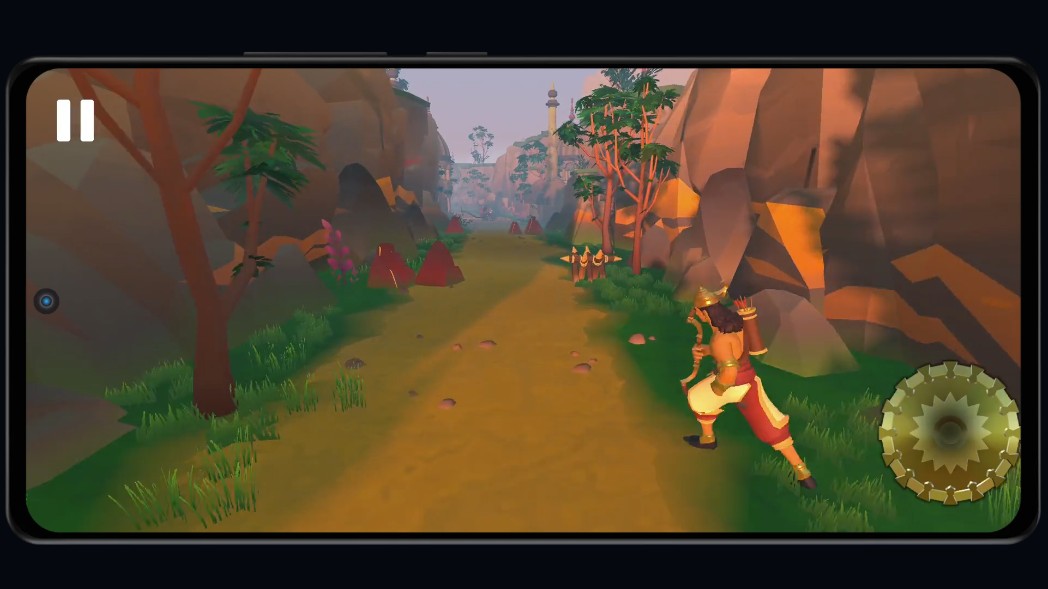
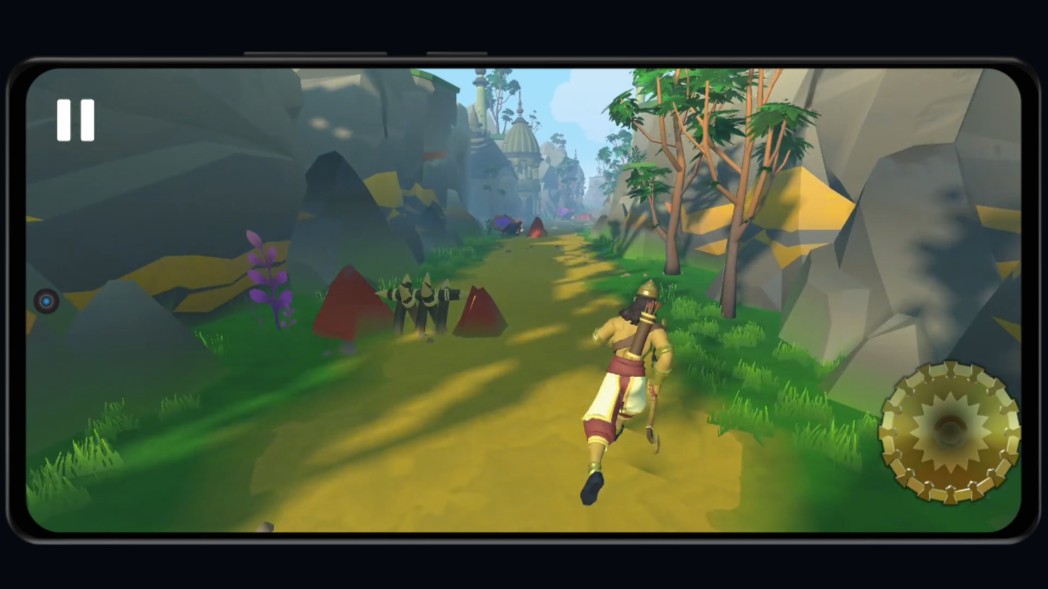
Teevra is, first and foremost, a genuinely great game. Set in the world of the Mahabharata — India's most beloved epic — players guide characters like Abhimanyu through richly designed battlefields and forests. The focus training is embedded invisibly within the gameplay itself.

Children don't ask to play Teevra because they want to improve their attention. They ask because they want to unlock the next level. The treatment happens automatically, every session, without the child's awareness or resistance.
Kurukshetra level gameplay showing the game UI and collectible targets
Traditional therapy: children disengage within weeks
⚔️
Kurukshetra Battlefield
Collectibles calibrated to attention baseline
Active
🌿
Forest of Kamyaka
Sustained attention endurance module
Unlocked
🏹
Arjuna's Challenge
Impulse control and focus speed training
Week 3
✓  Children complete 85%+ of daily sessions when the programme is game-based
02
Reason Two

The science has already been proven — and approved by the FDA.

Teevra is not built on theory. The neuroscientific approach behind our platform — using adaptive digital games to train the brain's attention systems — has been rigorously validated at the highest possible level.

In 2020, the US Food and Drug Administration (FDA) authorised the world's first prescription digital therapeutic for children with ADHD — a video game. The FDA's conclusion was unambiguous: delivering precisely calibrated stimuli through adaptive gameplay genuinely strengthens the neural pathways for focus and executive function. The science is no longer theoretical; it is regulatory fact.

Teevra applies these same FDA-validated neuroscientific principles, guided by world-leading experts from UC Berkeley — without requiring a prescription, and designed specifically for children who haven't yet received a clinical diagnosis but are clearly struggling with attention in the age of social media.

🧬
Neuroplasticity-Based Training
The same science behind FDA-approved digital therapeutics
The brain can be retrained. Neuroplasticity — the brain's ability to form new connections — means attention is a skill, not a fixed trait. The right stimuli, delivered consistently, rebuild the neural pathways for deep focus.
Adaptive stimulus delivery works. The key is calibration — the challenge must stay in the zone just beyond current capability. Too easy, the brain doesn't adapt. Too hard, it disengages. Teevra's AI engine manages this in real time.
15 minutes a day is enough. Clinical research shows that brief, consistent, properly calibrated training sessions produce measurable neurological change within 4–6 weeks.
FDA Validated:  In 2020, the US FDA authorised the world's first prescription digital therapeutic — a video game — for childhood attention disorders, conclusively proving that adaptive game-based training improves attention. Teevra is built on the same validated neuroscientific principles.
03
Reason Three

You see exactly how your child is improving — every single week.

One of the most frustrating things about investing in your child's wellbeing is not knowing if it's working. Therapy is a black box. Screen time limits create conflict with no measurable outcome. Medication changes behaviour, but whether the underlying brain function is improving is unknowable.

Teevra starts with a 15-minute diagnostic assessment that measures your child's current attention across six key metrics and benchmarks them against their age group. Then, every week, you receive a clear progress report showing exactly how those metrics are moving.

You will know — precisely, with data — whether your child's hit rate improved, whether their reaction time is getting faster, whether their ability to sustain attention across a session is growing. No guesswork. No faith required. Just evidence.

Weekly Progress — Attention Score
Week 1
9th
Week 2
21st
Week 3
34th
Week 4
48th
Week 5
57th
Week 6
71st
+62
Percentile points gained
over 6 weeks of daily play
Hit rate
91.7%
↑ from 74.2%
Response time
303ms
↓ from 481ms (faster)
Omissions
8
↓ from 23
Consistency
High
↑ from Low
How It Works

Simple to start. Profound in impact.

Three steps, starting with a free diagnostic assessment that takes less than 15 minutes and gives you your child's complete attention profile.

🎯 1
Step One
Free Attention Diagnostic
Your child completes a 15-minute scientifically designed assessment. You receive a detailed attention profile — 6 metrics, age-group benchmarks, and a personalised report explaining what the results mean.
Free · 15 minutes · No prescription
🎮 2
Step Two
AI-Personalised Training Game
Based on your child's attention profile, our AI engine calibrates the game's challenge in real time — always working at exactly the right intensity to drive neurological improvement without frustration or boredom.
15 min/day · 6 weeks · Adaptive
📊 3
Step Three
Weekly Progress Reports
Every week you receive a clear report showing exactly how your child's attention metrics are improving — hit rates, response times, consistency scores, and percentile rankings against their age group.
Weekly report · Parent dashboard
📊
App Screenshot — Step 1
The 15-minute diagnostic interface — first screen your child sees on launch
Kurukshetra level gameplay showing the game UI and collectible targets
📈
App Screenshot — Step 3
Parent progress dashboard — weekly report showing attention metrics over time
⏱️
15 minutes a day The only time commitment required
📅
6 weeks To see measurable attention improvements
🆓
Free to start Diagnostic assessment at no cost
📱
Available on app store Mobile-first, designed for children
The Science

Built with the world's leading
neuroscientists

Teevra's methodology isn't created by app developers. It is designed and continuously refined by researchers at the forefront of cognitive neuroscience and brain development.

Scientific Advisory Board
📸
Advisor & Team Headshots
Replace the initials avatars below with real circular headshots (min 160×160px). Headshots are the single highest-trust signal on this section.
RK
Dr. Robert Knight
Professor of Neuroscience, UC Berkeley
Internationally recognised for his work in cognitive neuroscience and neuroplasticity. His research on prefrontal cortex function — the brain region responsible for sustained attention and executive control — directly informs Teevra's training architecture. Advisor to multiple leading brain-health initiatives globally.
AP
Dr. Alexis Pracar
Research Fellow, UC Berkeley
Research fellow specialising in pediatric brain development, attention systems, and developmental cognition. Dr. Pracar's expertise ensures Teevra's programme is precisely calibrated for the developing brains of children aged 8–16 — not simply adapted from adult attention research.
AP
Dr. A. Pradeep
Co-Founder · UC Berkeley PhD · 90+ Patents
Applied neuroscience and AI expert. Serial entrepreneur who has built and exited multiple successful ventures at the intersection of brain science and technology. Holds over 90 patents. The scientific anchor of Teevra's methodology and AI engine design.
Why the FDA Validation Matters to You
🏛️
FDA-Authorised Proof of Concept
In 2020, the US FDA authorised the world's first prescription digital therapeutic — a video game — for children with ADHD. The FDA's ruling confirmed that adaptive game-based stimulation genuinely and measurably improves attention in children. This is the same neuroscientific foundation Teevra is built on.
🧪
Clinical Trials, Not Marketing Claims
The FDA authorisation was based on a randomised, controlled clinical trial with 348 children — the gold standard of medical evidence. The methodology Teevra applies has met that bar of scientific scrutiny in the world's most rigorous regulatory environment.
🌍
Accessible Without a Prescription
The FDA-authorised product requires a clinical ADHD diagnosis and a doctor's prescription. Teevra brings the same validated neuroscientific methodology to the far larger population of children experiencing attention challenges from digital overload — without any barrier to access.
Teevra is not a medical device and does not claim to diagnose or treat ADHD or any clinical condition. The FDA reference relates to the validated neuroscientific approach of using adaptive game-based stimulation to improve attention — a methodology shared with FDA-authorised products in this category.
Get Started Today

Give your child their
focus back.

Start with a free 15-minute attention diagnostic. You'll get your child's complete attention profile — 6 metrics, age-group benchmarks, and a full written interpretation — at no cost, with no commitment.

Questions? Email us at foundersoffice@teevra.ai